Sunday, December 1, 2013

Phrachuap Khiri Khan - Monkey Business

Ao Manao is just south of the provincial capital.

http://tinamue.blogspot.com/2011/10/prachuap-khiri-khan-ao-manao.html

It markets itself as "City of Dolphins and Monkeys", which may appear a bit weird. But a few kilometers north of the city is Khao Sam Roi Yot (300 Peaks National Park) and just north of that is Dolphin Bay. It is named like this (in English, not in Thai) due to the frequent sightings of dolphins.
At the northern edge of the city is Wat Thammikaram, which to foreigners is marketed as Monkey Temple. The name stems from the fact that many (and I mean many) monkeys live in the temple and on the hill (Khao Chong Krajok), which the temple sits atop. The temple provides excellent views of the bay and countryside, and you can feed or watch the monkeys on your way up the stairs leading to the temple.
Ao Prachuap - viewed from Wat Thammikaram (direction north) with Khao Sam Roi Yot seen in the distance.
View from Wat Thammikaram (direction south) of town with Ao Manao seen in the distance.
The Dan Singkhon Border Crossing (the border to Myanmar) is less than 20 kilometers away from the city in direction south. It is worth a visit if you are in the area anyway.


Sunday, November 17, 2013

Loy Krathong

This event is about getting together with your chosen one and float or launch (loy) a decoration (krathong) to symbolize your life and future together.

This Thai festival is a major revenue earner and the local equivalent of Valentine's Day. There is a very nice story behind the tradition, which is promoted by authorities .... in short, that this tradition was started by a favorite consort of a Sukhothai king.

One weakness about this story is that she (Nopphamat) has never been proven to exist. Another weakness is that a very similar festival is also celebrated in Laos and in Shan State.

And texts written in Bangkok 150 years ago indicate that the tradition originated from a Brahmanical festival, which was modified when Buddhism conquered Southeast Asia. According to those texts, the candle venerates the Buddha, while launching the krathong's symbolizes letting go of one's anger and defilement.

The traditional krathong  was made from a slice of the trunk of a banana tree. Modern krathongs are of styrofoam. Styrofoam is not biodegradable so while the loy krathong festival is romantic, it is an environmental disaster.
In the past, this was a festival mostly celebrated in the provinces where it - like many other festivals - was an occasion for the village community to get together. Still today, some villages arrange that people work together to construct large krathongs that are then launched in a lake or river at night.

Sunday, November 10, 2013

Rayong Beaches

A couple of months ago, an oil leak from a tanker was badly managed. As a result, oil slicks marred the sea around Koh Samed. However, PTT (responsible for the leak and for the clean-up) has in recent weeks been busy announcing and advertising that Rayong's beaches are now all clean.
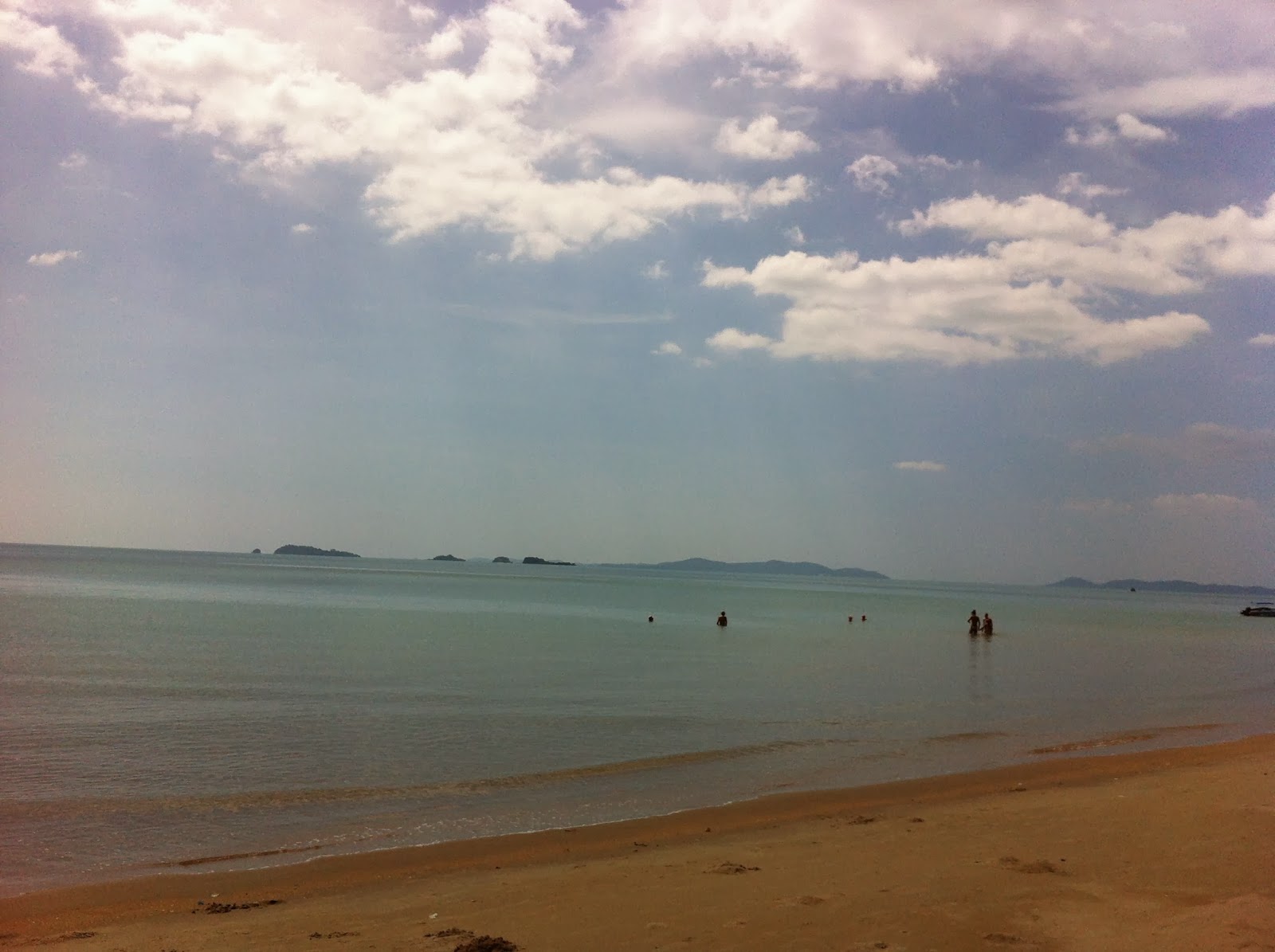
View from Chak Pong Beach westward towards Hin Suay Nam Sai
Today, I visited Chak Pong Beach and Rim Pae Beach, the two best beaches on mainland Rayong. There was absolutely no sign of any oil slicks. The beach sand was nice and the water crystal clear.
View from Chak Pong Beach eastward towards Laem Mae Phim
As the sun was shining, it turned out to be a great day.
Rim Pae Beach - view of Koh Samed


Friday, November 1, 2013

Nakhon Ratchasima - Phi Mai Lightshow

My first blog on Phi Mai was a while back


The Phi Mai sanctuary (Prasat Hin Phi Mai) is also where a “culture” show held one weekend each November. People flock there in droves, so one has to be ready to endure crowds and traffic jams if one decides to take the journey.
What is to be seen is traditional Thai dances with spectacular lighting effects and the Phi Mai ruins forming a stunning backdrop.

If one wants to take it all in, one has to be seated somewhat towards the back. However, while this gives the best view, the distance rendered my phone camera incapable of capturing the beauty of the show.

When visiting Phi Mai, don't forget to grab some local food under the branches of the giant tree at Sai Ngam


http://tinamue.blogspot.com/2011/11/nakhon-ratchasima-sai-ngam.html


Friday, October 11, 2013

Cambodia - Sihanoukville Revisited Again


http://tinamue.blogspot.com/2013/03/cambodia-sihanoukville-revisited.html

The beaches of Sihanoukville are beautiful, superb, unspoiled, and relatively unused although the main beach can get crowded on weekends. Here in the rainy season, they are not much of an attraction because when it rains in Sihanoukville, it pours.

However, if you visit during the dry and warm seasons head east of town. There you will soon leave the crowds behind you while the beauty of the beach increases. Soon you will end at an estuary where your main risk is to have the tranquility disturbed by a herd of cows.
There are also beaches to the west of Sihanoukville – for example, Hun Sen Beach located a few kilometers before the oil depot - that are totally deserted. Almost no tourists venture west of the Port of Sihanoukville. The most likely reasons are that the first kilometers of road are in a terrible state of repairs and that this first stretch of road goes through slum-like fishing villages. Those facts will deter most tourists daring to venture outside of town on their own.

Wednesday, October 9, 2013

Cambodia - Phnom Penh

I like Phnom Penh. In the area around Wat Phnom, there are still several buildings in short distance from each other that showcase the architectural splendor the French colonial masters once provided.
Head office of the Cambodian postal service
Despite the increasingly jam-packed traffic, the pace is still relatively sedate. Based on my personal experience, the relative chaos lends itself best to either getting around as a pedestrian or by renting a motorcycle.

Motorcycle taxis (with two or three wheels) are inexpensive alternatives to the less adventurous visitor. One has to be more adventurous than me to try out the local snacks, which are for sale in the markets and by street vendors.
Fried snacks


Monday, October 7, 2013

Laos - Bajieng Resort

In Champassak province, the heights of the Bolaven Plateau are just east of the Mekong River. The area has numerous waterfalls and coffee plantations.
Green coffee beans
There is also a “cultural theme park”, which has become a hit among Thais traveling on guided tours. If you happen to be in the neighborhood, it is worth a visit.

The “cultural theme park” is actually named Bajieng Resort. The resort opened in December 2003. A Thai national, Wimol Kijbamrung, had worked hard for five years to turn a large undeveloped tract of land into a resort with nature and culture as the its underlying themes. However, one week after the official opening, Khun Wimol came down with a serious bout of malaria and lost his eyesight.
Tad Pha Suam Waterfall
Inside the resort area, there is a stunning waterfall (Tad Pha Suam) with a couple of bridges crossing the river downstream thus creating good spots for taking photos. “Original” houses from different tribes have been erected plus people have been hired to dress up in “original” ethnic outfits, play instruments, play children’s games, weave or whatever so as to create an impression of being in a real rural village. 
It is of course fake, but it seems less fake, less commercial than what can be experienced at assorted hill tribe (long-neck etc) villages in Thailand. The park’s restaurants are quite good and since part of the revenues supposedly goes to support local tribes, one should accept the falseness and consider it “edutainment”. 
Sabaidee